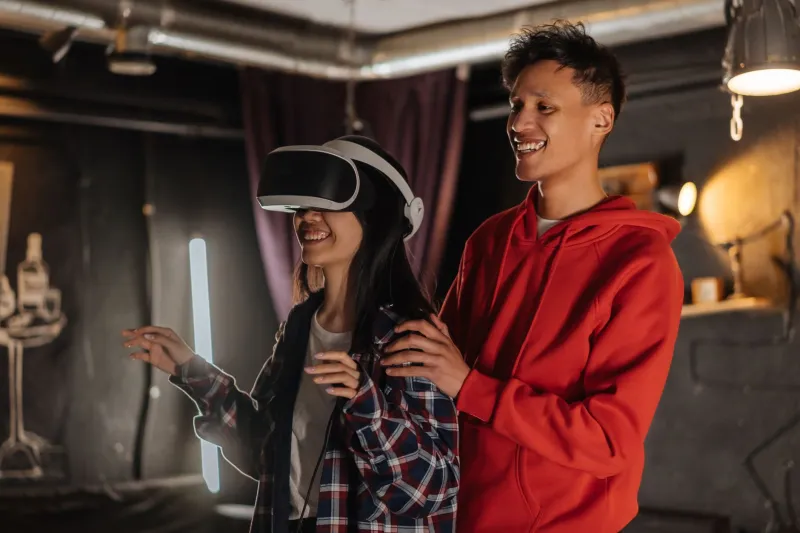
Wired Wrong for VR: The People Who May Never Stop Getting Sick — And What That Means for the Industry
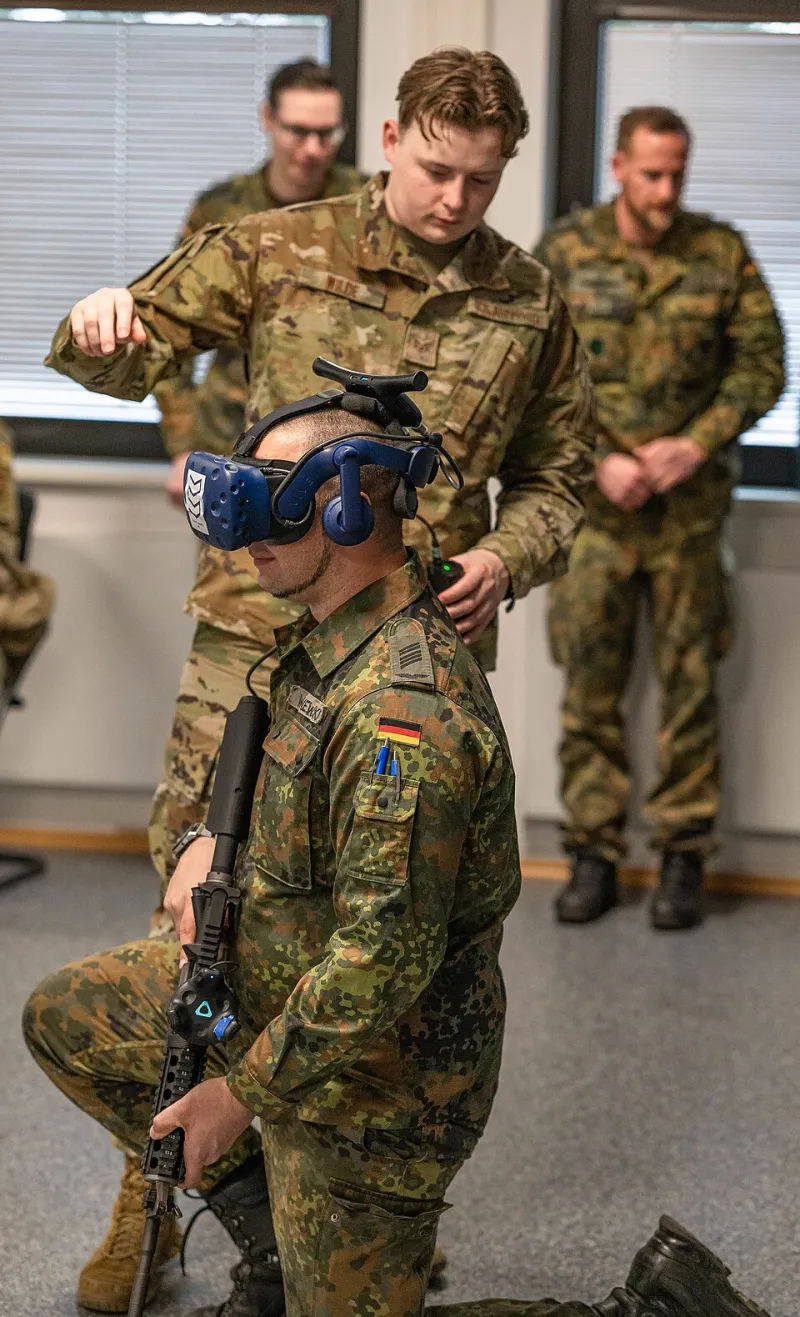
Photo: U.S. Air Force photo by Airman 1st Class Edgar Grimaldo, Public domain, via Wikimedia Commons
Put on a headset for the first time and there's a decent chance your brain is going to throw a small tantrum. The nausea, the weird spatial disorientation, the sudden urge to sit down even though you were already sitting — it's a rite of passage that most VR enthusiasts laugh about in retrospect. "Oh yeah, I hurled after my first hour in Half-Life: Alyx. Good times."
But here's the thing: for somewhere between 20 and 30 percent of players, that phase never actually ends. The headset comes off, the stomach settles, and then the whole miserable cycle starts again next session. And the session after that. These aren't people who just need to "push through it." According to a growing body of neurological research, some brains are genuinely, stubbornly wired in ways that make immersive VR a fundamentally hostile experience — possibly forever.
So what's actually going on inside those heads? And more importantly, is the VR industry doing anything meaningful about it?
The Conflict at the Core of Your Skull
Simulator sickness — the clinical term for what most people just call VR nausea — comes down to a sensory mismatch your brain simply refuses to reconcile. Your eyes are telling you that you're sprinting through a neon-lit corridor. Your inner ear is telling you that you're parked in your living room. Your vestibular system, which handles balance and spatial orientation, gets caught in the crossfire and responds the way it always has when the brain detects conflicting environmental signals: it assumes you've been poisoned, and it tries to get the toxin out of your body.
That's not a metaphor. The prevailing neurological theory is that motion sickness is literally an ancient poison-response mechanism misfiring in a modern context. Which is both fascinating and deeply annoying when all you want to do is play Beat Saber.
For most people, the brain eventually learns to recalibrate. Repeated exposure trains the vestibular system to lower its alarm threshold, and the nausea fades. This is why experienced VR players can spend hours in a headset that would floor a newcomer. Their brains have adapted.
But not everyone's brain plays along.
Why Some People Just Don't Adapt
Researchers at institutions including the University of Minnesota and various labs within the Navy's spatial disorientation research programs have been poking at this question for years — partly because simulator sickness has been a military training problem long before consumer VR existed. What they've found is that susceptibility isn't random. It correlates with some surprisingly specific biological factors.
Women, on average, report higher rates of simulator sickness than men, possibly linked to hormonal fluctuations that affect vestibular sensitivity. People with a history of migraines are significantly more susceptible, as are those with certain inner ear conditions. There's also emerging evidence that genetic variations in how the vestibular-ocular reflex is tuned — essentially how tightly your eyes and balance system are coupled — can make some individuals almost constitutionally resistant to adaptation.
In plain terms: some people aren't bad at VR. Their nervous systems are just configured in a way that makes the sensory conflict more intense and harder to override. No amount of gradual exposure training is going to fully rewire that.
That's a uncomfortable truth for an industry that has largely treated motion sickness as a user education problem rather than a design problem.
The Workarounds That Mostly Work (And the Ones That Don't)
The VR community has developed a whole toolkit of adaptation strategies over the years, and some of them genuinely help — even for chronic sufferers. Comfort modes that replace smooth locomotion with teleportation-based movement can dramatically reduce nausea triggers for many players. Vignetting, which darkens the peripheral vision during movement, tricks the brain into perceiving less visual-vestibular conflict. Higher frame rates — 90Hz and above — make a real, measurable difference for a large portion of susceptible users.
Pharmacological options exist too. Scopolamine patches, typically prescribed for sea sickness, have shown some effectiveness. Ginger supplements get recommended constantly in VR forums, with mixed but occasionally compelling anecdotal results. Some users swear by wristbands that apply pressure to the P6 acupressure point. The science on those is... thin.
For the truly resistant cases, researchers have been experimenting with galvanic vestibular stimulation — essentially delivering small electrical currents to the vestibular nerve to artificially synchronize it with visual input. Early results are interesting. Practical consumer applications are probably still years away.
The harder reality is that for a meaningful percentage of players, even the best combination of these interventions only reduces the problem rather than eliminating it. A two-hour gaming session might become a forty-five minute gaming session with a mandatory recovery period. That's progress, but it's not a solution.
The Accessibility Problem Nobody Wants to Talk About
Here's where the conversation gets a little thorny. The VR industry has made genuine strides on accessibility in recent years — better options for seated play, one-handed controller support, colorblind modes, and so on. But chronic simulator sickness represents an accessibility barrier that most developers still treat as an afterthought.
The default design philosophy in VR gaming remains built around players who can handle smooth locomotion, fast movement, and extended sessions. Comfort options exist, but they're often tacked on rather than built in — and in competitive or narrative experiences, they frequently compromise core gameplay in ways that feel punishing.
Consider that if 25 percent of potential players are experiencing chronic nausea, that's not a fringe edge case. In a US market where VR headset adoption is finally starting to scale meaningfully, that's millions of people. Millions of people who bought the hardware, downloaded the games, and discovered that the experience the industry promised them is physically inaccessible.
Some developers are starting to take this more seriously. Comfort rating systems have become more standardized on platforms like Meta's App Lab and Steam's VR section. A handful of studios are experimenting with AI-driven adaptive locomotion systems that detect when a player's movement patterns suggest disorientation and automatically adjust the experience in real time. That's genuinely promising.
But the economics of VR development still push toward flashy, immersive, fast-moving experiences that showcase the hardware. Slow and comfortable doesn't make for great trailers.
Where Does This Leave the Chronically Sick?
Honestly? In a frustrating middle ground. The neuroscience has gotten clearer — we understand more about why some brains resist adaptation, and the research into vestibular stimulation and personalized comfort profiling is moving in encouraging directions. But practical solutions that work for everyone are still somewhere on the horizon.
If you're one of the people who's been quietly convinced that VR just isn't for you, it's worth knowing that the limitation is biological, not personal. Your brain isn't broken. It's just running a very aggressive security system that modern immersive tech hasn't fully figured out how to bypass yet.
And if you're a developer reading this — and some of you definitely are — the 25 percent number is worth sitting with. That's not a bug report. That's a design challenge that the industry still hasn't fully decided to take seriously. The headsets are getting better, the content is getting richer, and the audience is getting bigger. At some point, leaving a quarter of your potential players on the outside because their vestibular systems are wired differently stops being an oversight and starts being a choice.