Headset or Heartbreak: When One Partner Lives in the Metaverse and the Other Doesn't
There's a moment a lot of couples know well. The dishes are done, the kids are down, and the couch is finally free. For one partner, that means unwinding together. For the other, it means strapping on a headset and disappearing into a world their spouse can't see, hear properly, or really understand.
That gap — small at first, then enormous — is quietly reshaping American relationships in ways nobody really saw coming when VR headsets started flying off shelves.
The New Third Wheel Is Wireless
Relationship therapists across the country are starting to notice a pattern. Couples who once argued about screen time and video games are now navigating something more immersive, more isolating, and harder to argue against because, well, VR is genuinely compelling.
"The challenge with VR compared to, say, someone scrolling on their phone is that the person in the headset is completely gone," says one licensed marriage and family therapist based in Austin, Texas, who has seen a noticeable uptick in VR-related relationship complaints since 2023. "There's no eye contact, no peripheral awareness, no way to tap them on the shoulder and feel like they actually registered you. It creates a very specific kind of loneliness for the partner who's left in the room."
That loneliness has a name in some online communities now: being "headset-widowed." It's a term used — sometimes jokingly, sometimes not — by partners who feel like they've lost someone to a virtual world that has no room for them.
When It Shows Up in Divorce Court
It might sound dramatic, but VR use has started appearing in actual divorce filings. Not always as the primary cause, but as a contributing factor — cited alongside emotional neglect, financial strain from equipment purchases, and in a handful of cases, infidelity concerns tied to relationships formed inside social VR platforms.
Family law attorneys in states like California, Florida, and New York have begun fielding questions about how to handle VR-related disputes in asset division (who keeps the $3,500 rig?) and custody conversations where one parent's heavy VR schedule is raised as a concern.
One attorney in Los Angeles noted that while VR itself rarely appears on a divorce petition as a standalone cause, it keeps surfacing in the supporting narrative — the way a client might describe a spouse who came home from work and immediately disappeared into a headset for four or five hours every night, weekend included.
"It's not that different from a gambling or alcohol problem in terms of how it functions in the relationship," she said. "The behavior is consuming time, money, and emotional presence. That's the pattern my clients describe."
Compatibility in 2025 Looks Different
Here's something that would have sounded absurd five years ago: people on dating apps are now listing VR use as a compatibility factor. Some are flagging it as a dealbreaker — either "I'm deep into VR and I want someone who gets it" or "I need a partner who's actually present."
Reddit threads in communities like r/OculusQuest and r/relationship_advice have been colliding in interesting ways, with users asking whether it's reasonable to expect a partner to try VR or whether it's fair to prioritize headset time over shared evening routines. The answers are all over the place, which is kind of the point — there's no cultural consensus yet on where VR fits in a healthy relationship.
Some couples have found a middle ground. Designated VR nights, shared experiences using platforms that let both partners enter the same virtual space, or simply treating it the way one partner might treat a solo hobby like golf or reading. The couples who seem to navigate it best are the ones who talked about it early and openly, rather than letting it become a slow-burning grievance.
The Immersion Problem Nobody Talks About
Part of what makes this dynamic so thorny is that VR is designed to be all-consuming. The whole point of a good headset is to make the real world disappear. When it works — and modern hardware makes it work really well — the person inside isn't half-watching TV while their partner talks to them. They are genuinely, neurologically elsewhere.
That level of presence inside a virtual space is incredible for gaming, for creativity, for social connection with people across the country. But it has a direct cost to whoever is physically in the same room. And unlike a night out with friends or a long gym session, VR happens at home, which makes it feel — to the non-VR partner — like a choice to be absent while being physically present. That's a particularly frustrating combination.
Therapists point out that this mirrors some dynamics seen in early smartphone addiction research, but the immersion factor cranks up the intensity significantly.
What Couples Are Actually Doing About It
Not every VR-adjacent relationship story ends badly. Plenty of couples have figured out how to coexist with one partner's deep investment in immersive tech. A few patterns show up repeatedly in the couples who make it work:
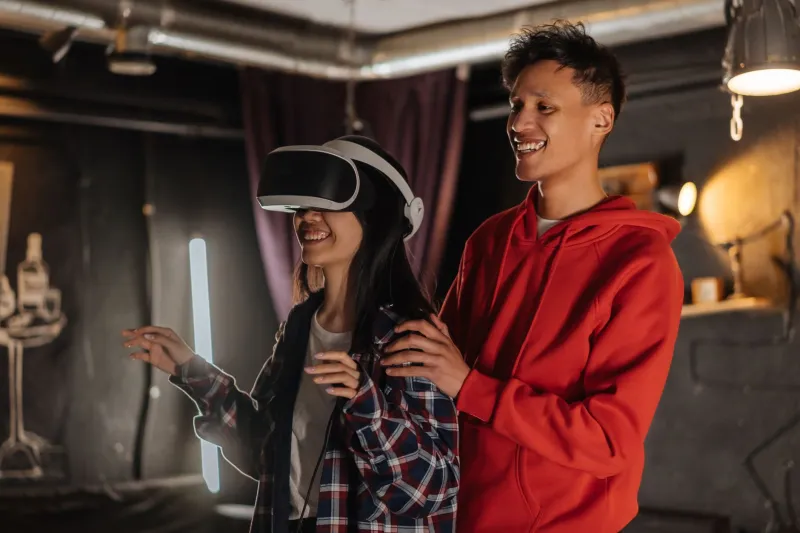
Shared entry points. Even if one partner doesn't want to game in VR, experiencing it together — even briefly, even just watching what the other person sees on a mirrored screen — closes some of the comprehension gap. Understanding why someone loves something goes a long way.
Honest time accounting. Couples who set loose agreements around VR time — not rigid rules, but genuine conversations about what feels fair — report less resentment than those who let it go unspoken until it explodes.
Recognizing escape patterns. Therapists flag this one specifically. When VR use spikes during periods of relationship stress, it can become a way to avoid difficult conversations. That's when a hobby crosses into something more concerning.
Trying it together. Multiplayer and social VR platforms have made it genuinely possible for couples to share virtual experiences. Some partners who initially wanted nothing to do with VR have found real enjoyment once they tried it in a low-pressure, shared context.
Where This Is Headed
VR adoption isn't slowing down. Headsets are getting cheaper, lighter, and more capable every year. The number of Americans who spend meaningful time in virtual worlds is only going to grow, which means the relationship dynamics around VR use are going to need real, ongoing cultural conversation — not just dismissal or panic.
For couples navigating this right now, the technology itself isn't really the issue. It's the same thing relationships have always been about: feeling seen, feeling prioritized, and figuring out how two people with different needs can build a life that works for both of them.
The headset just makes it a lot easier to opt out of that negotiation for a few hours. And sometimes, a few hours becomes a habit. And habits, left unexamined, have a way of becoming the story of a marriage.
If you're the partner left on the couch, that's worth saying out loud before it becomes a filing.