Why VR Arcades Are Quietly Becoming the New Bowling Alley — And Making Serious Money

Photo: U.S. Fish and Wildlife Service Southeast Region, Public domain, via Wikimedia Commons
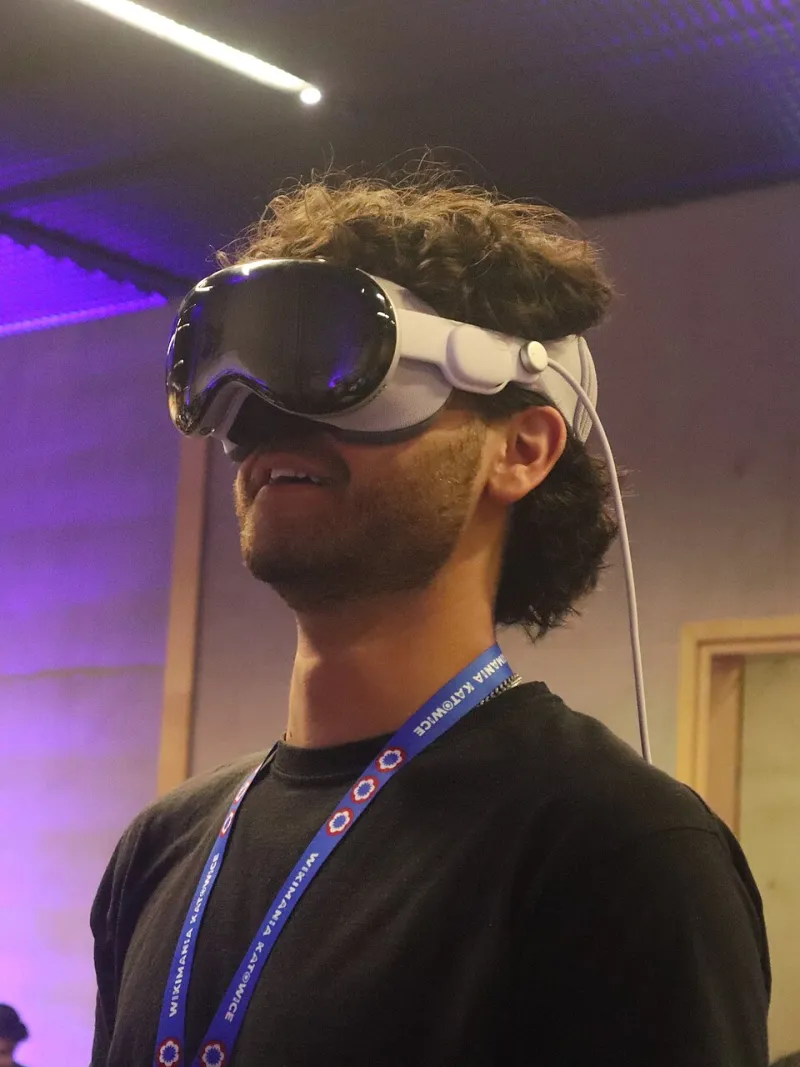
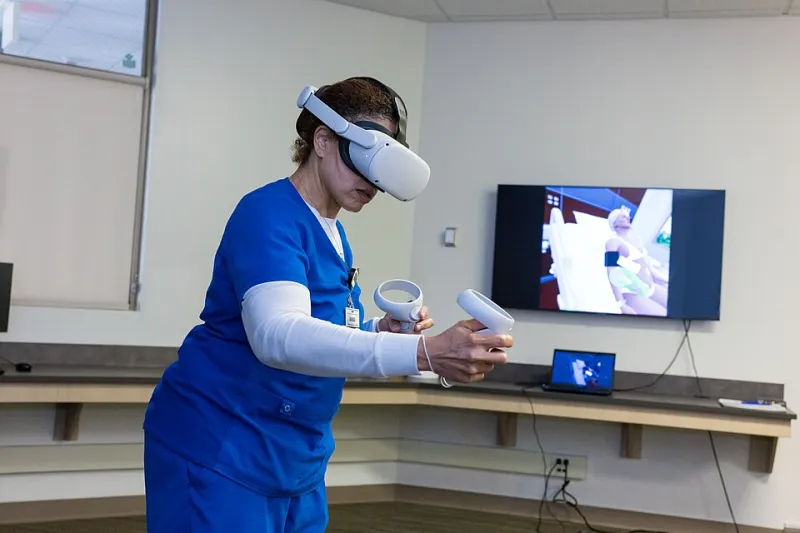
Drive through any mid-sized American city right now and there's a decent chance you'll pass something that didn't exist five years ago: a storefront with blacked-out windows, neon signage, and a name like "Zero Gravity VR" or "Hyperspace Lounge." Inside, small groups of people are strapped into haptic vests, stumbling through zombie apocalypses and outer space missions together, laughing too loud and paying by the hour.
Location-based VR entertainment — the industry's formal term for what most people just call VR arcades — is having a genuine moment. And the economics behind it are more interesting than you might expect.
The Numbers Don't Lie
The global location-based VR market was valued at over $1.5 billion in 2023, with the US representing the largest single market. Industry analysts project continued double-digit growth through the end of the decade, which is a striking trajectory given that consumer VR headsets like the Meta Quest 3 have simultaneously become cheaper and more capable.
You'd think accessible home hardware would cannibalize the arcade model. In most entertainment categories, that's exactly what happens. Streaming killed Blockbuster. Home consoles gutted the classic arcade industry in the '90s. But VR arcades aren't just surviving — they're expanding. New venues opened in Atlanta, Denver, Phoenix, and Nashville in 2024 alone, and franchise models like Sandbox VR and Zero Latency are scaling aggressively across suburban and urban markets.
So what's actually going on?
The Experience Gap Home VR Can't Close
Talk to any VR arcade operator and they'll tell you the same thing within the first five minutes: the hardware gap between home and commercial VR is massive, and most consumers have no idea.
Take Sandbox VR, which operates venues in cities including Chicago, Los Angeles, and Houston. Their full-body tracking system uses motion capture technology derived from Hollywood productions. Players aren't just holding controllers — every limb is tracked in real time. The haptic suits provide physical feedback across the torso and arms. The play spaces are large enough to run, dodge, and physically interact with other players. None of this is replicable in a 10x10 living room with a Quest headset and two handheld controllers.
"People come in expecting it to be like what they've tried at home, and it's just a completely different category," said one venue manager in Austin, Texas. "The look on their face when they realize they can actually see their friends' bodies moving in the game — that's the moment we know they're coming back."
This experiential delta is the core business thesis of the entire sector. Commercial venues can afford $50,000+ setups per player that simply aren't viable for home use. The per-session economics work out because the hardware is amortized across hundreds of paying customers.
The Social Layer Is the Actual Product
Beyond raw hardware, there's a simpler explanation for why VR arcades are thriving: people want to do things with other people, and Gen Z in particular has developed a strong appetite for shared physical experiences after years of digital-first social life.
Bowling alleys understood this decades ago. So did escape rooms, which exploded in popularity in the 2010s for almost identical reasons — not because the puzzles were uniquely brilliant, but because solving them together created a specific kind of social bonding that a movie or a bar couldn't replicate.
VR arcades are the natural evolution of that format. The shared challenge, the physical comedy of watching your friend panic-dodge a virtual monster, the post-session debrief over drinks — it's a complete social experience package. And unlike escape rooms, the content is infinitely renewable. Same venue, dozens of different worlds.
Millennials and Gen Z are specifically driving this, with research consistently showing both demographics prioritizing "experience spending" over material purchases. A $40-per-person VR session with three friends hits a sweet spot that a new piece of home hardware — which you'd use alone on a Tuesday night — simply doesn't.
How the Business Model Actually Works
For operators, the unit economics are genuinely attractive once you get past the startup costs. A well-run venue with six to eight VR stations can generate $800-$1,200 per hour at peak times, with sessions typically running 30-60 minutes. Corporate team-building packages — which command premium pricing — have become a major revenue stream that most operators didn't initially anticipate.
"The corporate bookings basically subsidize our weekend pricing," explained one operator running a multi-location business in the Southeast. "A company bringing in 20 employees for a team event will pay $1,500 to $2,000 without blinking. That's a Friday afternoon that pays for a week of overhead."
Birthday parties, bachelor and bachelorette events, and school field trips round out the booking calendar. The venue model is fundamentally event-driven, which insulates it somewhat from the casual-use competition that home hardware represents.
Real estate strategy matters enormously. The most successful operators have moved away from expensive mall locations toward second-tier retail spaces — former fitness studios, closed bank branches, strip mall anchors — where square footage is affordable and parking is plentiful. The suburban playbook, in particular, is proving highly effective in markets where there's disposable income but limited premium entertainment options.
The Road Ahead
Not every VR arcade is going to make it. The sector has seen its share of closures, particularly among smaller independent operators who underestimated maintenance costs and staffing complexity. Commercial VR hardware breaks down. Headsets need cleaning between sessions. The operational overhead is meaningfully higher than, say, running a board game café.
But the operators who've cracked the formula — strong content libraries, reliable hardware, smart event-driven booking models, and an instinct for the social experience design that makes groups want to return — are building genuinely durable businesses.
The bowling alley comparison isn't just a cute analogy. Bowling as a pastime peaked in the 1960s, got written off as dying for decades, and then stabilized into a reliable community institution that's still generating revenue in 2025. The VR arcade might be tracing a similar arc — not a tech fad, but a new permanent fixture in how Americans spend their weekend nights.
And honestly? Watching your friend absolutely lose their mind over a virtual T-Rex is a better story than another night of doomscrolling. The market seems to agree.