Your Resume in the Metaverse: The VR Career Boom That's Rewriting the Rules in 2025
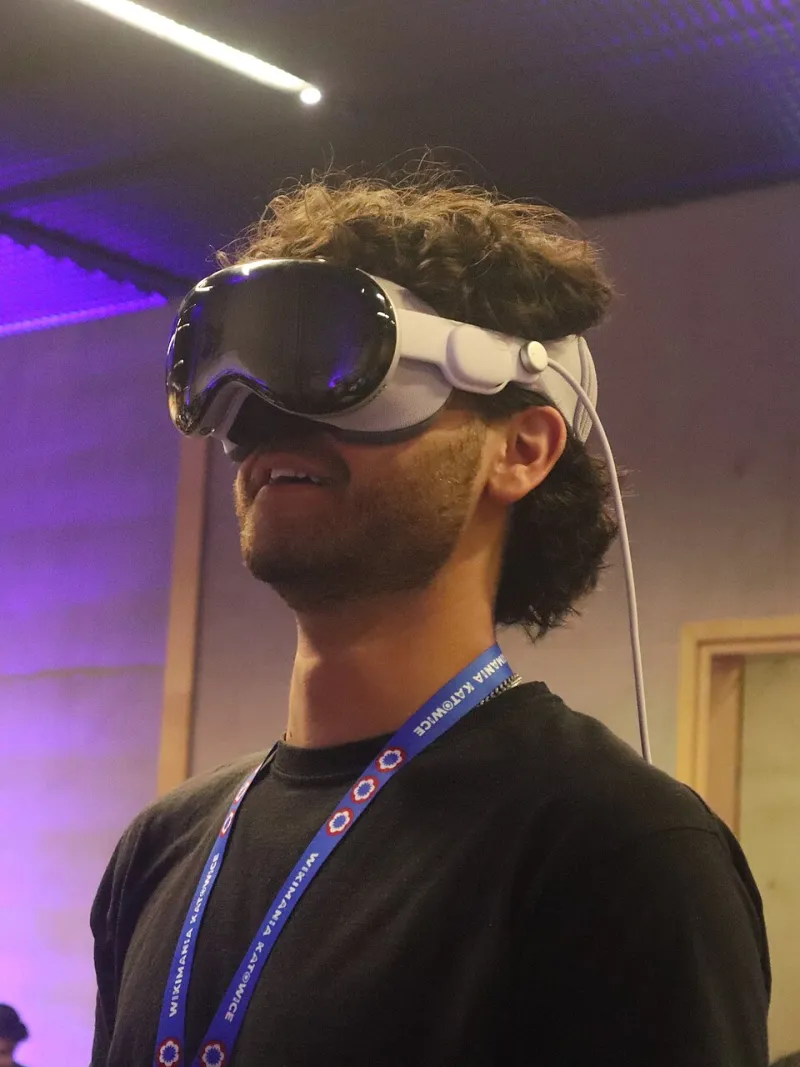
Photo: Jinoy Tom Jacob, CC BY-SA 4.0, via Wikimedia Commons
Not too long ago, telling someone at a dinner party that you wanted to work in virtual reality was basically a conversation stopper. People nodded politely and changed the subject. Fast forward to 2025, and that same admission might just make you the most interesting person in the room — and probably the one with the most job offers waiting in their inbox.
The immersive tech industry has quietly exploded into a legitimate career frontier, and companies from scrappy startups to Fortune 500 giants are scrambling to find people who actually know what they're doing inside these virtual spaces. If you've been sleeping on VR as a professional path, consider this your wake-up call.
Why Now? The Timing Has Never Been Better
A few things converged to make 2025 the inflection point everyone in the industry had been predicting. Headset adoption crossed a critical threshold — affordable standalone devices from multiple manufacturers finally made VR accessible beyond early adopters. Enterprise investment in immersive platforms surged, with industries like healthcare, real estate, retail, and defense all pouring money into VR applications. And perhaps most importantly, the content pipeline finally matured enough that companies need real creative and technical talent to keep up with demand.
Meta, Apple, Sony, and a constellation of smaller players are all competing for the same shrinking pool of qualified workers. That supply-demand gap? It's your opportunity.
The Roles That Are Actually Hiring
Let's get specific, because "work in VR" is about as useful career advice as "work in computers" was in 1995. The jobs that are genuinely proliferating right now break down into a few distinct lanes.
Spatial Experience Designers are arguably the hottest commodity right now. These are the folks who think about how users move through, interact with, and feel inside virtual environments. It's part UX design, part architecture, part psychology. If you have a background in traditional UX or game level design, this is a natural pivot, and salaries are ranging from $85,000 on the low end to well north of $140,000 at established tech firms.
VR Content Creators are the storytellers of the metaverse. Think of them like YouTubers or podcast producers, except their canvas is a fully immersive 360-degree environment. Brands need these people to build training simulations, product demos, virtual showrooms, and entertainment experiences. Freelancers in this space are charging anywhere from $5,000 to $50,000+ per project depending on complexity.
Metaverse Architects — and yes, that's an actual job title now — are the engineers and designers who build persistent virtual worlds and spaces. They need to understand 3D modeling, game engines like Unreal and Unity, and increasingly, blockchain-based asset ownership. Entry-level positions are landing around $90,000, with senior roles pushing $160,000 and beyond in major tech hubs.
Avatar and Digital Fashion Designers might sound niche, but the virtual goods economy is genuinely massive. People spend real money on digital clothing, accessories, and avatar customization. If you have a background in fashion design, graphic arts, or 3D modeling, this corner of the market is wide open.
Skills That Will Actually Get You Hired
Here's the honest truth: most hiring managers in immersive tech aren't expecting a fully formed VR specialist to walk through the door. The talent pool is too small for that. What they are looking for is transferable skill sets paired with demonstrated curiosity about the medium.
Unity and Unreal Engine proficiency are the most consistently mentioned technical requirements across job postings. If you can build and navigate these platforms, you're already ahead of a huge portion of applicants. Blender and other 3D modeling tools round out the technical must-haves for design-oriented roles.
Soft skills matter more than you'd expect. Spatial storytelling — the ability to think about narrative and user experience in three dimensions rather than on a flat screen — is something employers struggle to find and are willing to pay for. Collaboration inside virtual workspaces is also increasingly important, since many teams now conduct parts of their workflow inside the platforms they're building.
Certifications are starting to emerge as credible signals too. Unity's official certification program, Epic Games' Unreal learning pathways, and a growing number of university-backed immersive design courses are giving hiring managers something concrete to evaluate.
Where the Jobs Are (Geographically Speaking)
While remote work has loosened the geographic constraints considerably, certain cities are still pulling ahead as VR career hubs. The San Francisco Bay Area remains the center of gravity for hardware and platform development. Los Angeles is booming for immersive entertainment, virtual production, and content creation — no surprise given Hollywood's long embrace of emerging tech. Austin and Seattle are rising fast, with strong enterprise VR ecosystems tied to tech campuses and gaming studios.
But here's what's interesting: mid-sized markets like Nashville, Denver, and Raleigh are seeing genuine VR job growth driven by healthcare, education, and corporate training applications. You don't necessarily have to relocate to a coastal tech mecca to build a real career here.
The Realistic Path Forward
If you're starting from scratch, the honest timeline is probably 12 to 18 months before you're competitive for entry-level roles. That means committing to learning one or two core tools, building a portfolio of projects (even small personal ones count), and getting involved in communities like VR/AR Association events or local developer meetups.
If you already have adjacent skills — game development, film production, architecture, education technology, physical therapy — the jump is much shorter. Companies are actively recruiting from these adjacent fields and offering onboarding support because they know pure VR specialists are hard to find.
The window for being an early mover in this career space is still open, but it won't stay that way forever. The professionals who plant their flag in immersive tech right now are going to have a serious head start when the mainstream wave arrives — and by every indicator, that wave is already building.