Feel Everything or Feel Nothing: The Haptic Suit Industry's Billion-Dollar Bet on Who Gets to Touch the Metaverse
You've probably spent at least a few minutes arguing about headset prices. Maybe you winced at the Meta Quest 3's cost, or quietly talked yourself into the Apple Vision Pro before quietly talking yourself back out of it. But while that debate has dominated every VR forum and comment section for the past few years, a completely separate arms race has been unfolding — one that makes a $3,500 headset look like a budget purchase.
Full-body haptic suits. The kind that let you feel a virtual punch, a rainstorm, a handshake, or a bullet. And the companies building them are not, for the most part, building them for you.
The Tech Is Real — And It's Expensive as Hell
Let's get the basics out of the way. Haptic feedback in VR isn't new — your controller rumbles, your phone buzzes, we've all been there. What's different about the current generation of full-body haptic systems is the level of granularity. We're talking dozens, sometimes hundreds, of individual actuators distributed across a wearable suit that can simulate pressure, temperature change, impact, and even the texture of a virtual surface against your skin.
Companies like bHaptics, Teslasuit, and OWO have been pushing this space hard. Teslasuit, arguably the most talked-about player, uses electrical muscle stimulation alongside haptic feedback to create sensations that go well beyond a simple buzz. Their full suit setup — gloves, vest, the whole package — runs somewhere between $5,000 on the conservative end and well north of $50,000 for enterprise-grade configurations.
For context, that's a down payment on a house in some parts of the country. It's a fully loaded truck. It's a lot of VR headsets.
So Who's Actually Buying These Things?
Here's where the story gets interesting, and a little uncomfortable for anyone who got into VR dreaming of a fully immersive consumer future.
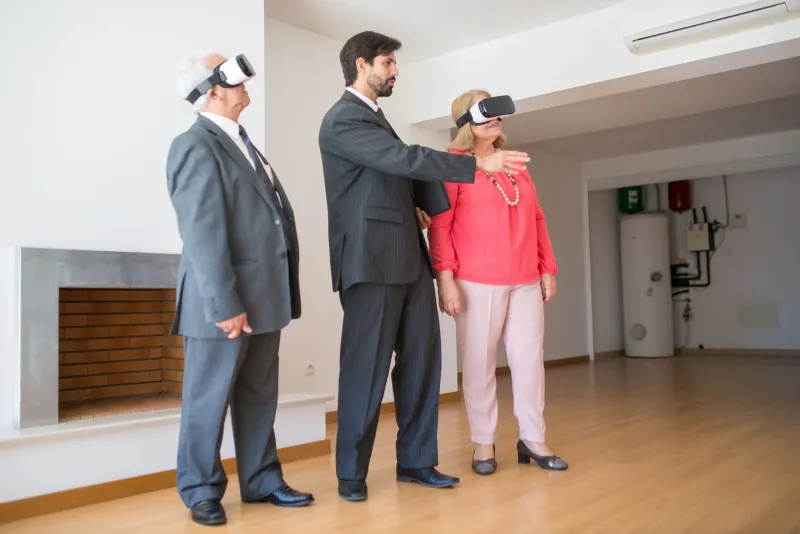
The companies building haptic suits are largely surviving — and in some cases thriving — because of two customer segments that have nothing to do with gaming: the military and enterprise training.
The U.S. Department of Defense has been pouring money into immersive simulation for years. Flight training, combat scenario rehearsal, medical procedure simulation — all of these benefit enormously from haptic feedback, and the military has budgets that make enterprise software contracts look modest. When a haptic suit helps a soldier train more realistically or a surgeon practice a procedure with tactile feedback before they ever touch a patient, the $20,000 price tag becomes a line item rather than a luxury.
On the enterprise side, industries like automotive manufacturing, oil and gas, and aerospace have been snapping up immersive training systems with haptics included. The logic is straightforward: if a $30,000 haptic training setup prevents one serious workplace accident or reduces onboarding time by 30%, it pays for itself fast.
The result is that the most sophisticated haptic technology in existence is currently living inside military bases, corporate training facilities, and research labs — not living rooms.
The Consumer Dream, Deferred
Bhaptics has made the most visible push toward everyday consumers with their TactSuit line, which starts around $500 for a vest-only setup. That's actually a reasonable price point by haptic standards, and it's compatible with a growing number of VR games. But even at $500, adoption remains niche. Most people who buy a VR headset aren't also budgeting for a haptic vest. And the experience gap between a $500 consumer vest and a $20,000 enterprise suit is significant.
OWO, a Spanish company with a strong U.S. market presence, has been aggressive about marketing their skin sensation system to gamers, and their approach — focusing on a lighter, more affordable garment — shows there's appetite for a middle path. But they're still fighting the same uphill battle: convincing consumers that the experience is worth an extra several hundred dollars on top of an already expensive hobby.
The uncomfortable truth is that full-body haptic immersion, the kind that actually transforms what VR feels like, is currently a feature reserved for institutions with procurement budgets. The consumer version is a preview. A proof of concept. A taste.
What This Means for the Future of Immersive Entertainment
There's a pattern here that should feel familiar if you've watched other tech industries evolve. Early computing was for corporations. Early mobile data was for executives. Early streaming quality was for people with fast internet who could afford fast internet. In each case, the technology eventually filtered down — but the gap between what the wealthy early adopters experienced and what the general public got access to shaped the product roadmap for years.
Haptics is following the same trajectory, and that has real implications for where VR goes as an entertainment medium.
If the companies refining this technology are primarily optimizing for military contracts and enterprise clients, the consumer product becomes secondary. Features get prioritized based on what a training simulation needs, not what a horror game or a social VR platform needs. The roadmap bends toward durability, precision, and institutional use cases — not the kind of nuanced, playful feedback that would make a VR concert or a virtual sports experience genuinely transcendent.
There's also a social dimension worth sitting with. VR has always carried a promise of democratizing experience — the idea that someone in rural Kansas could visit a virtual concert hall or a virtual world that felt just as real as anything available to someone in Manhattan. Haptics, at current price points and current development priorities, threatens to fracture that promise. The fully embodied VR experience — the one where you can feel the bass drop or the virtual handshake — becomes something you access if you can afford it, or if your employer pays for it.
The Companies That Could Change the Equation
There are genuine reasons for optimism, and they're worth acknowledging. Manufacturing costs for actuator technology have been dropping. Wireless haptic systems are improving. And the sheer amount of investment flowing into this space — from venture capital, from defense contracts, from enterprise deals — means the R&D pace is accelerating.
Some insiders point to the next three to five years as a potential inflection point, where a meaningful full-body haptic experience could hit a $300 to $500 price range. If that happens alongside headset price normalization, the consumer equation changes significantly.
But that future isn't guaranteed, and it isn't close yet. Right now, the haptic suit industry is a gold rush happening in a part of the mine most VR enthusiasts haven't visited. The people getting rich aren't selling to gamers. They're selling to governments and corporations, and they're using that money to slowly, gradually build toward a consumer product that may or may not arrive before the next wave of VR skepticism sets in.
For now, the most immersive thing you can feel in VR is still mostly theoretical — unless your employer paid for it.