Hours Played Is a Lie: What VR Platforms Are Getting Wrong About Engagement

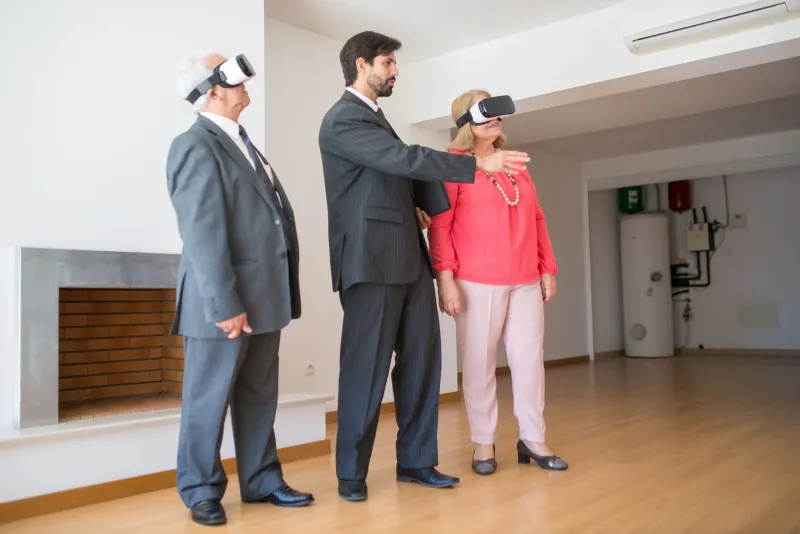
Photo: Achim Lammerts (Syntaxys), CC BY-SA 4.0, via Wikimedia Commons
If you work anywhere near the VR industry — or just follow it closely enough to have opinions at parties — you've heard some version of the same success story: "Our users average X hours per session. Engagement is up Y percent quarter over quarter." It sounds great. It feels like proof that the technology is working.
But a growing number of researchers, behavioral psychologists, and even some platform insiders are starting to ask an uncomfortable question: what if time-spent is the worst possible way to measure whether VR is actually doing its job?
The Metric That Made Sense for Everything Else
Time-on-platform isn't a bad metric. For social media, streaming services, and mobile games, it's a reasonable proxy for value delivered. If someone's spending three hours on your app, something is keeping them there. The logic seems sound.
VR borrowed this framework wholesale when the industry started scaling up, and honestly, it made sense at the time. You need some number to show investors. Session length is easy to track, easy to compare, and easy to present in a slide deck.
The problem is that VR isn't a flat screen. It's a fundamentally different sensory environment, and the human brain processes it differently — a fact that makes the old engagement playbook not just imprecise, but potentially counterproductive.
What Neuroscience Is Actually Saying
Researchers studying presence — the technical term for the feeling of actually being somewhere in a virtual environment — have found that meaningful immersion doesn't scale linearly with time. You don't get twice as immersed by spending twice as long in a headset.
In fact, the relationship often runs the other direction. Studies from labs at places like Stanford's Virtual Human Interaction Lab and various European cognitive science programs have found that presence tends to peak relatively early in a session and then plateau or even degrade. Your brain, which is working overtime to reconcile conflicting sensory inputs, gets fatigued. The magic starts to wear off. And yet the user is still logged in, still technically "engaged" by the platform's metrics.
What you end up measuring isn't peak immersion. It's the long tail after peak immersion — which, for many users, starts to resemble the glazed-over autopilot state we associate with doomscrolling. The platform's dashboard looks great. The user's experience is quietly getting worse.
The Addiction Confusion
Here's where things get genuinely tricky. There's a real and ongoing debate in behavioral psychology about whether heavy VR use constitutes addiction in any clinically meaningful sense, or whether it's better understood as intense engagement with a compelling medium.
The distinction matters more than it might seem. Addiction frameworks tend to focus on compulsive use despite negative consequences — the user can't stop even when they want to. Intense engagement, on the other hand, can look similar from the outside (long sessions, frequent returns, prioritizing VR over other activities) but be driven by genuine reward and satisfaction.
The problem with optimizing purely for hours played is that it doesn't distinguish between these two states at all. A platform chasing session length has every incentive to push users toward compulsive patterns — friction-reducing design, variable reward loops, social pressure mechanics — even if those patterns ultimately produce burned-out, resentful users who quit entirely six months later.
Some researchers argue this is already happening. Anecdotal reports from heavy VR users frequently describe a cycle of intense engagement followed by sudden, total disengagement — not the gradual fade you'd expect from a healthy relationship with a medium, but something closer to a crash.
What "Meaningful" Engagement Actually Looks Like
So if hours played is the wrong answer, what's the right question?
Behavioral psychologists studying immersive media suggest a few alternative signals worth tracking:
Voluntary return rate after breaks. Does the user come back after a day off, a week off, a month off? A user who returns consistently after natural breaks is demonstrating sustained genuine interest. A user who only engages in marathon sessions and then disappears may be showing a different pattern entirely.
Self-reported presence quality. This one's harder to operationalize, but some platforms are experimenting with brief post-session check-ins that ask users to rate how "there" they felt, rather than just logging how long they stayed. Early data suggests these scores correlate more strongly with long-term retention than raw session time.
Cross-context engagement. Does the user talk about their VR experiences outside the headset? Do they share content, join communities, recommend experiences to friends? This kind of spillover engagement is a strong signal that the experience created genuine memory and meaning — not just time filled.
Session initiation patterns. Did the user choose to put the headset on, or did they find themselves reaching for it without quite deciding to? The behavioral difference between intentional use and habitual compulsion can sometimes be detected in timing patterns — specifically, whether sessions cluster around intentional windows (weekend afternoons, Friday nights) or bleed into unplanned moments.
The Business Case for Getting This Right
None of this is purely academic. Platforms that optimize for the wrong metric tend to build products that feel increasingly hollow to their most engaged users — and in VR, those are the exact users you can't afford to lose.
The economics of VR hardware mean that the people spending the most time in headsets are also the people who bought expensive equipment, who have the disposable income to purchase premium content, and who are most likely to influence their social networks to adopt the technology. Burning them out with compulsion-optimized design isn't just ethically questionable — it's a genuinely bad business strategy.
A handful of smaller VR studios are already experimenting with design philosophies built around what some are calling "satisfying completion" rather than endless engagement. The idea is to create experiences that feel genuinely finished — that leave users with a sense of having done something real — rather than perpetually dangling the next reward just out of reach. Early retention numbers from some of these studios are quietly impressive, though the major platforms haven't moved in this direction yet.
The Harder Conversation Nobody Wants to Have
Ultimately, the hours-played problem is a symptom of a bigger issue: the VR industry imported its success metrics from industries that don't share its fundamental value proposition.
VR isn't trying to keep you scrolling. At its best, it's trying to put you somewhere real enough to change how you feel, what you know, or who you connect with. That's a completely different promise — and it probably needs completely different ways of knowing whether it's being kept.
The platforms that figure this out first won't just have better ethics. They'll have better products, better retention, and a user base that actually evangelizes the technology instead of burning out and walking away.
The clock is running. Just maybe not in the direction the dashboard thinks.