Licensed to Sell Nothing You Can Touch: The Real Estate Agents Cashing In on Virtual Properties
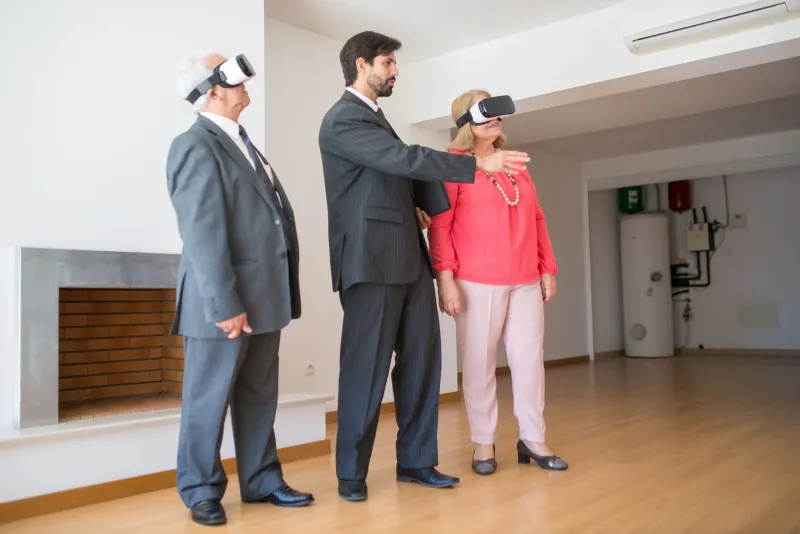
Imagine closing a six-figure deal on a property that has no foundation, no square footage, and no address you could plug into Google Maps. No inspection contingencies. No HOA drama. Just a handshake — digital or otherwise — and a commission that hits your bank account the same way any other real estate deal would.
This isn't science fiction. It's Tuesday for a small but fast-growing slice of the US real estate industry.
As immersive platforms continue to mature and companies pour serious capital into building out virtual headquarters, branded experience spaces, and even employee housing inside metaverse environments, someone has to move those units. Increasingly, that someone is a licensed real estate agent who used to spend their weekends hosting open houses in the suburbs.
From Curb Appeal to Render Appeal
The pivot sounds absurd until you look at the numbers. Platforms like Decentraland, The Sandbox, and a handful of enterprise-grade VR environments have seen virtual land transactions that rival — and in some cases exceed — what you'd pay for commercial real estate in mid-sized American cities. During the peak of metaverse investment activity, individual parcels were selling for hundreds of thousands of dollars. Even in the current, more tempered market, prime virtual real estate near high-traffic digital hubs commands prices that would make a Denver realtor raise an eyebrow.
Companies aren't just buying for speculation anymore. They want functional spaces — photorealistic virtual offices where remote teams can meet, branded showrooms where customers can browse products in VR, and digital event venues that can host thousands of simultaneous attendees without a fire marshal in sight. Building those spaces takes developers and designers. But finding them, pricing them, and brokering the deals? That's where the agents come in.
"It's the same psychology as physical real estate," one agent working in the space explained in a recent industry forum thread. "Location matters. Foot traffic matters. Proximity to popular destinations matters. The asset just happens to be made of polygons instead of plywood."
The Licensing Gray Zone Nobody Wants to Talk About
Here's where things get complicated. Real estate licensing in the US is regulated at the state level, and not a single state has a clear framework for virtual property transactions. Depending on how a deal is structured — whether it involves NFT-based land deeds, platform-specific tokens, or traditional contractual agreements — it may or may not fall under existing real estate law.
Some agents are operating under the assumption that their existing license covers them. Others are structuring deals as digital asset transactions, which sidesteps real estate law entirely but opens up a different regulatory can of worms. A few platforms have started creating their own internal certification systems, essentially issuing credentials that carry weight inside their ecosystem but mean nothing outside it.
The National Association of Realtors hasn't issued formal guidance on virtual property sales, though there's been internal discussion. Until regulators catch up, agents working this space are largely navigating by feel — and hoping they don't become the test case that forces a legal reckoning.
For now, the ambiguity is working in their favor. Without clear rules, there's also no formal competition. The barrier to entry is low for anyone willing to learn the platforms, and the agents who got in early are locking down client relationships before the market formalizes.
Finding Clients Who Don't Know They Need You Yet
Client acquisition in virtual real estate looks nothing like farming a zip code or buying leads from Zillow. The agents doing well in this space are showing up where the buyers actually are — Discord servers, VR networking events, developer conferences, and LinkedIn threads where enterprise tech teams talk about their metaverse buildout strategies.
The pitch isn't "I sell houses." It's closer to "I understand this market better than your IT department does, and I can keep you from overpaying for a virtual plot that's three digital blocks from nowhere."
Corporate clients are the most lucrative segment right now. Brands that want a permanent presence in a VR platform need someone to evaluate location value, negotiate lease terms (yes, some platforms offer leasing rather than outright purchase), and manage renewals. A single enterprise client can generate the kind of recurring revenue that would make a traditional residential agent's commission structure look quaint.
Smaller clients — individual creators, VR content studios, independent businesses building out digital storefronts — are more numerous but require more education. A lot of the early work is convincing someone that the virtual property market follows recognizable logic, that it isn't just gambling on digital tokens, and that having professional representation actually matters.
What Six Figures in Virtual Commissions Actually Looks Like
The agents making real money in this space aren't working volume. They're working relationships. A single well-placed corporate deal — say, helping a retail brand secure and develop a flagship virtual showroom on a high-traffic platform — can generate a commission in the $20,000 to $80,000 range depending on the total transaction value and how the fee structure is negotiated.
Stack three or four of those deals in a year alongside some smaller transactions and ongoing consulting retainers, and you're looking at income that competes with top-producing agents in major US metro markets — without the brutal open house schedule or the client who calls at 11pm because they want to renegotiate after the inspection.
There's also a consulting layer that many virtual real estate agents are adding to their income. Companies building metaverse presences often don't know what they don't know. Charging for market analysis, platform selection advice, and virtual property management creates recurring revenue that doesn't depend on closing a new deal every month.
Is This a Real Shift or a Fancy Bubble?
Fair question. The metaverse hype cycle has gone through some brutal corrections since its peak, and plenty of virtual land investors are sitting on assets that have lost significant value. Anyone who bought digital property at the height of the frenzy and expected to flip it six months later learned a hard lesson about speculative markets.
But the agents who are building sustainable businesses in this space aren't betting on speculation. They're betting on utility — the idea that as VR hardware gets cheaper, as remote work norms continue to evolve, and as younger consumers grow up treating virtual spaces as real places, the demand for professionally managed digital real estate will grow steadily rather than explosively.
The smart money isn't on a gold rush. It's on being the person who sells the picks and shovels — or in this case, brokers the land claim — while everyone else is still figuring out if the gold is real.
In 2025, the headset is getting lighter, the graphics are getting sharper, and the line between a space you inhabit physically and one you inhabit digitally keeps blurring. Someone's going to sell you your next office. It might just be someone whose previous listing had a two-car garage and a finished basement.