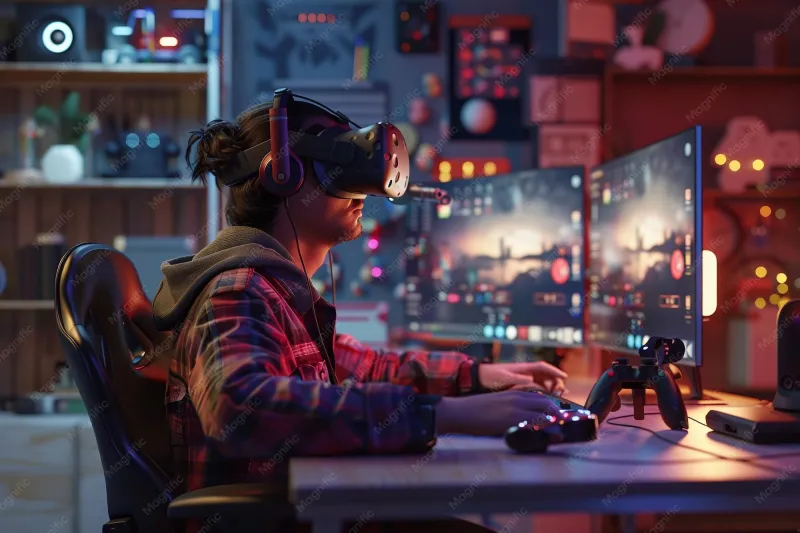
Small Teams, Big Paydays: The Indie VR Developers Cashing In on Niche Audiences
Photo: Fuad Kamal from USA, CC BY-SA 2.0, via Wikimedia Commons
There's a certain kind of hustle happening right now in the VR world that doesn't get nearly enough attention. It's not happening at sprawling studios in LA or during splashy keynote announcements. It's happening in home offices in Austin, in small dev shops in Portland, in two-person teams operating out of co-working spaces in Chicago. Indie VR developers — armed with small budgets, deep passion, and a very targeted idea of who their audience is — are quietly building businesses that actually work.
While AAA publishers keep asking whether VR is "worth it" at scale, these smaller creators have already answered the question for themselves. And the answer, increasingly, is yes — as long as you stop trying to make something for everyone.
The Niche-Down Strategy Nobody Warned You About
Here's the thing about chasing mass appeal in VR: it's brutally expensive and the odds are stacked against you. Big studios can absorb a flop. A three-person indie team cannot. So the smarter move — and more developers are figuring this out — is to go narrow.
We're talking about experiences built for very specific communities. Meditation and breathwork apps designed for people already deep into mindfulness practice. Virtual aquariums built for marine biology enthusiasts who want something more immersive than a YouTube video. Detailed historical recreations aimed at Civil War buffs or architecture nerds. Niche hobby simulations — think competitive bonsai cultivation, amateur radio operation, or vintage car restoration — that would never get greenlit at a major studio because the addressable market looks "too small" on a spreadsheet.
But here's what those spreadsheets miss: a small, passionate audience pays differently than a casual one. They're more likely to buy premium content, leave detailed reviews, tell their communities about the experience, and stick around for updates. They don't just download and ghost — they become advocates.
Monetization Models That Actually Fit
One of the quiet innovations happening in indie VR isn't technical — it's financial. These developers are getting creative with how they charge for their work, and a lot of them are moving away from the traditional one-time purchase model entirely.
Subscription tiers are gaining traction, especially for experience-based content. A meditation VR studio might charge $9.99 a month for access to a rotating library of guided sessions, seasonal content drops, and community events. The recurring revenue is more predictable than hoping for a big launch weekend, and it creates a financial floor that lets small teams plan ahead.
Some developers are leaning into the "freemium plus community" approach — offering a solid base experience for free, then monetizing through premium add-ons, exclusive environments, or direct community membership platforms like Patreon or Discord subscriptions. The VR experience becomes the top of the funnel; the community becomes the business.
Direct-to-fan sales are another angle that's working well. Developers who've built audiences on platforms like Reddit, YouTube, or niche hobby forums often bypass app store gatekeepers entirely, selling directly through their own sites and keeping a much larger cut of every dollar.
Community Is the Product
Ask any successful indie VR dev what their real competitive advantage is, and most of them will say the same thing: their relationship with their audience. That's not a soft, feel-good answer — it's a strategic reality.
When you're building for a specific community, you're not guessing what people want. You're talking to them constantly. You're in their forums, responding to their feedback, sometimes playing your own game alongside them in multiplayer spaces. That kind of feedback loop lets small teams iterate faster and more accurately than any studio focus group ever could.
It also creates genuine loyalty. Users who feel seen by a developer — who feel like their weird, specific interest actually matters to someone — become the best marketing money can't buy. Word-of-mouth in tight-knit hobby communities spreads fast, and it carries real credibility in a way that a paid ad campaign just doesn't.
Several indie teams have gone even further, building their community into the actual development process. Early access programs, beta testing circles, and community voting on upcoming features turn users into stakeholders. When someone helped shape an experience, they're way more invested in its success.
The Platform Question
It's worth talking about where all this content actually lives, because the platform landscape matters a lot for indie developers. The Meta Quest ecosystem remains the dominant distribution channel in the US, and the Quest store's curated structure has historically been a tough gate for smaller titles to pass through. App Lab — Meta's more open pathway for indie content — has been a lifeline for many developers, offering discoverability without the full curation gauntlet.
SteamVR continues to be a strong option for PC-tethered experiences, with a more permissive publishing environment and a user base that skews toward dedicated enthusiasts — exactly the kind of people who seek out niche content. Some developers are also building web-based VR experiences using platforms like WebXR, which sidesteps app store fees entirely and makes content accessible across a broader range of devices.
The smartest indie teams aren't betting on just one platform. They're building with portability in mind and staying flexible as the hardware landscape continues to shift.
What This Means for VR's Content Future
The rise of profitable indie VR isn't just a feel-good story about scrappy underdogs. It's actually a signal about where the medium is heading — and it's a healthy one.
VR's long-term success as a content ecosystem depends on depth and variety, not just a handful of prestige titles. The major studios can deliver the spectacle. But the indie layer is what fills in everything else — the weird, specific, deeply personal experiences that make a platform feel alive. That's what happened with mobile gaming, and it's what happened with indie games on PC and console. VR is following the same pattern, just on its own timeline.
For anyone thinking about building in this space — whether you're a solo developer with a passion project or a small team looking for a sustainable business model — the message from the indie VR community is pretty clear: find your people first, then build for them. The riches, it turns out, really are in the niches.
And honestly? That's a way more interesting future than another studio trying to out-blockbuster the last blockbuster.