Forget Streaming and Merch: The Quiet Millionaires Building Empires Inside Virtual Reality
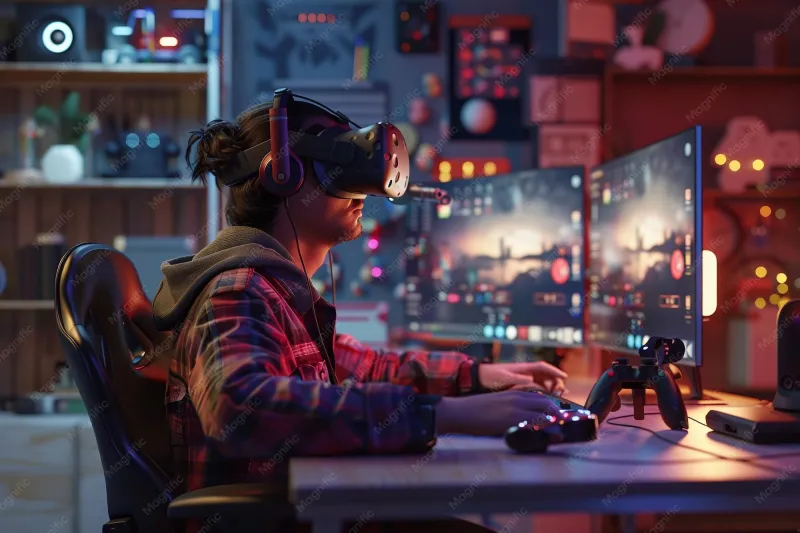
When people think about making money as a content creator, the mental image is pretty predictable: a ring light, a YouTube channel, maybe a Patreon with some exclusive posts. What almost nobody pictures is someone in a headset, building a custom virtual jazz club in VRChat and charging clients $3,000 a pop for private events inside it.
But that's exactly what's happening. Quietly, without a whole lot of fanfare, a generation of creators is figuring out how to monetize the immersive web — and some of them are doing it at a level that would make a mid-tier Instagram influencer genuinely jealous.
The New Creative Class Nobody's Talking About
The VR creator economy doesn't look like traditional content creation. There's no single platform running the show, no algorithm to game in the conventional sense, and no obvious playbook to follow. What there is, increasingly, is money — and people creative enough to find it.
Take virtual world designers. Platforms like VRChat, Rec Room, and Horizon Worlds all allow users to build custom environments, and the demand for high-quality spaces has exploded. Brands want immersive product launches. Artists want virtual galleries. Corporations want training simulations that don't feel like a PowerPoint presentation from 2009. Skilled designers who know how to build compelling virtual spaces are charging anywhere from a few hundred dollars for basic rooms to tens of thousands for fully interactive branded environments.
Then there are the virtual tour guides — a role that sounds almost quaint until you hear what some of them are earning. These are people who lead curated experiences through virtual worlds, whether that's a guided meditation in a photorealistic forest environment, a historical walkthrough of ancient Rome, or a social onboarding experience for remote teams. Companies have started paying serious money for these services, especially post-pandemic, when the appetite for remote team engagement basically never went away.
Avatar Customization: The Styling Industry Nobody Saw Coming
If you want a window into just how real this economy has gotten, look no further than avatar customization. In social VR spaces, your avatar is your identity. It's how people see you, recognize you, and form impressions of you. And just like in real life, a lot of people are willing to pay to look good.
Professional avatar designers — people who create custom 3D character models, outfits, animations, and accessories — are building genuine client rosters. Some operate like boutique fashion designers, offering bespoke avatars starting at $500. Others run more volume-focused shops, selling pre-made avatar assets on platforms like Gumroad or directly through VRChat's creator marketplace. Top sellers in these spaces aren't making influencer money. They're making software engineer money.
The accessories market is equally wild. Custom avatar props, emotes, and animations are basically the VR equivalent of streetwear drops — limited, desirable, and surprisingly expensive. A well-executed emote pack from a respected creator can sell hundreds of units at $15 to $30 each without any marketing budget beyond word of mouth inside the platform.
Immersive Storytelling: The Career Path Nobody Told You About in Film School
One of the most genuinely exciting corners of the VR creator economy is immersive narrative design. This is the craft of building story experiences that unfold around you rather than in front of you — think escape rooms, but layered with actual character development, environmental storytelling, and branching choices that respond to what you do.
Creators who specialize in this space are increasingly getting hired by everyone from indie game studios to theme parks scouting for digital experience concepts. Some are building their own titles and self-publishing through platforms like Steam's VR section or the Meta Quest store. Others consult for marketing agencies that want experiential campaigns with actual depth.
The barrier to entry is real — you need a combination of writing ability, spatial design instincts, and at least a basic grasp of tools like Unity or Unreal Engine. But for creators who put in the work, the payoff is a skillset that almost no one else has, competing for projects in a market that's hungry and still relatively underserved.
Why This Economy Is Still Flying Under the Radar
Here's the honest answer for why you haven't heard more about this: the platforms are fragmented, the success stories are scattered, and the creators who are doing well often have zero incentive to broadcast their strategies publicly. When your income depends on being one of the few people who knows how to do something well, teaching the whole internet your methods isn't exactly your first instinct.
There's also a perception problem. VR still carries a reputation as a niche hobby for tech obsessives, which makes it easy to dismiss as a place where serious money gets made. That perception is increasingly out of sync with reality. The Quest 3 sold better than most analysts predicted. Enterprise VR adoption is accelerating. And the audience for social and experiential VR is quietly maturing into something a lot more mainstream than the early adopter crowd.
What It Actually Takes to Break In
If you're a creator who's been watching this space and wondering whether there's room for you, the honest answer is yes — but not without some groundwork.
The creators making real money in VR aren't just talented. They're also platform-savvy, community-embedded, and relentlessly consistent. They show up in the spaces where their potential clients and collaborators hang out. They give away enough free work early on to build a reputation, then leverage that reputation into paid projects. It's not that different from how any creative career gets built — it's just happening inside a medium that most people are still figuring out how to take seriously.
The tools are more accessible than ever. Platforms like Blender for 3D modeling, Unity for environment and experience building, and a growing ecosystem of creator-focused VR tools have lowered the floor significantly. You don't need a film school degree or a game development background to get started. You need curiosity, consistency, and the willingness to invest time in a medium that rewards the people who show up early.
The Gold Rush Is Already On
Every creative economy has a window where the early movers set the terms. Blogging had it in the mid-2000s. YouTube had it around 2010. Podcasting had it a few years after that. VR content creation is in that window right now — not at the very beginning, but early enough that the landscape isn't crowded, the rates are still good, and the people building reputations today are going to be the established names when the mainstream audience finally catches up.
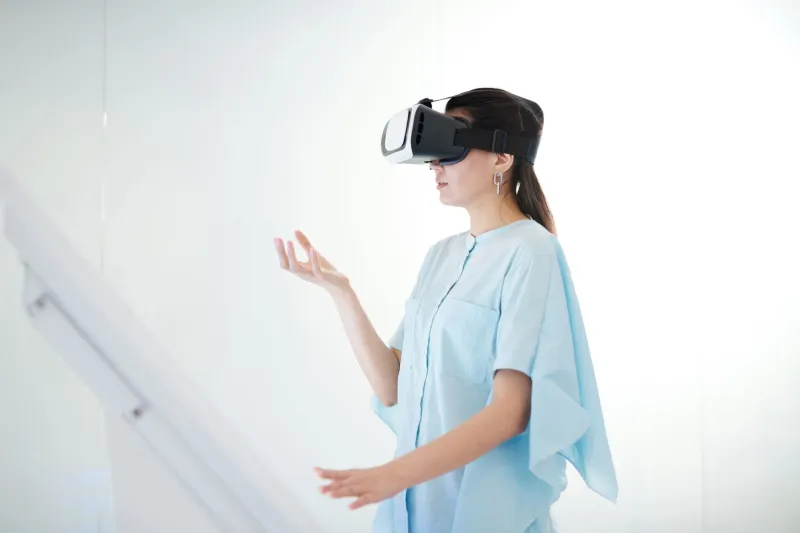
The headset on your shelf isn't just a gaming device. For the right creator, it might be the most underrated career tool in the room.