Alone Together: The Unexpected Isolation Crisis Hiding Inside Social VR

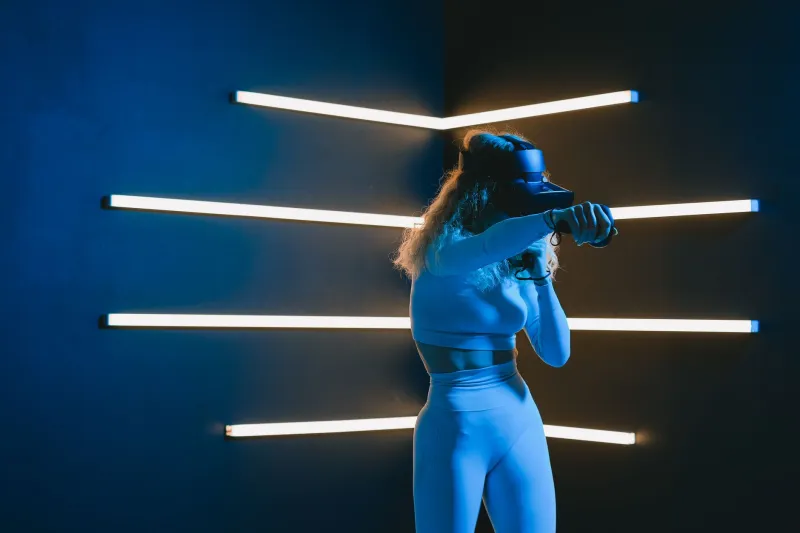
Photo: person wearing VR headset alone in dark room surrounded by digital avatars, via img.freepik.com
Log into almost any major social VR platform on a Tuesday night and you'll find thousands of avatars milling around digital lobbies, waving cartoon hands, maybe cracking jokes in a shared virtual living room. By every surface metric, it looks like connection. But ask the person behind the headset how they actually feel, and you might get a very different answer.
"I spent three hours in VRChat last weekend," says Marcus, a 29-year-old software developer from Austin. "Talked to maybe a dozen people. And when I took the headset off, I felt lonelier than before I put it on."
Marcus isn't alone in that feeling — which is, ironically, kind of the whole problem.
The Promise That Brought Everyone In
Social VR exploded into mainstream conversation around 2021, riding the wave of pandemic isolation and Meta's highly publicized metaverse ambitions. The pitch was genuinely compelling: forget Zoom calls and text threads. Step inside the conversation. Share physical space — virtual physical space, anyway — with friends, strangers, and communities built around your exact interests.
Platforms like VRChat, Rec Room, AltspaceVR (now largely defunct), and Horizon Worlds poured resources into building worlds that felt alive. And for a while, a lot of users bought in hard.
But the retention numbers told a quieter story. Meta's own internal research, leaked in 2022, showed that most Horizon Worlds users abandoned the platform within the first month. Meanwhile, mental health professionals started noticing something counterintuitive in their practices.
"I've had clients who are heavy social VR users come in describing classic symptoms of social withdrawal," says Dr. Priya Nandakumar, a licensed therapist based in Chicago who specializes in technology and behavior. "The platforms are designed for interaction, but interaction and genuine connection are not the same thing."
The Avatar Problem Nobody Wants to Talk About
One of social VR's core selling points — the ability to be anyone — turns out to be a double-edged sword. Avatar anonymity lowers the barrier to entry, sure. But it also creates a layer of psychological distance that can actually make authentic bonding harder, not easier.
When you can't read someone's real facial expressions, when their voice might be pitch-shifted, when their cartoon body communicates almost nothing about who they actually are, the brain's social processing systems struggle. Humans are wired for nuance. We read micro-expressions, body language, the slight hesitation before someone speaks. Strip all of that out and replace it with a floating polygon head, and something fundamental gets lost.
"There's a concept in psychology called parasocial interaction — the feeling of connection without reciprocal relationship," Dr. Nandakumar explains. "Social VR can amplify that in a really tricky way. You feel like you're connecting because you're physically co-present in a space, but the depth just isn't there."
Some platforms are experimenting with facial tracking technology to address this — Meta's Quest Pro included eye and face tracking specifically to make avatars more expressive. But adoption has been slow, and the uncanny valley effect means that more realistic avatars sometimes feel creepier rather than more relatable.
Algorithms Aren't Great Matchmakers
Another friction point is the way most social VR platforms handle discovery. Rather than organic community-building, many rely on algorithmic matchmaking that prioritizes activity metrics over genuine compatibility. You get thrown into rooms with the most concurrent users, pushed toward trending worlds, nudged toward whatever keeps your session time ticking upward.
Jordan Lee, a community moderator for a mid-sized VR gaming community, has watched this play out firsthand. "The platforms want engagement numbers, so the algorithm optimizes for that," Jordan says. "But engagement doesn't mean people are forming real bonds. It means they're sticking around, which is different."
Smaller, interest-specific communities — book clubs in VR, language exchange groups, niche gaming guilds — tend to report much higher satisfaction than the big general-purpose social hubs. The difference, Jordan argues, is intentionality. "When someone shows up to a virtual D&D session, they have a reason to be there and something to talk about. That's way more powerful than just wandering a digital plaza hoping to bump into someone interesting."
Technical Friction Is Still a Real Barrier
It's also worth acknowledging the practical stuff. Social VR requires a headset that a lot of Americans still don't own, a solid internet connection, and enough physical space to move around without knocking over a lamp. The setup friction alone filters out huge swaths of potential users, which means the communities that do form can feel oddly homogenous — skewing younger, more tech-literate, and more male than the broader population.
For users who don't fit that default mold, the experience can feel alienating before they've even had a real conversation. Several women and LGBTQ+ users interviewed for this piece described dealing with harassment in major social VR spaces as a regular, exhausting occurrence — something that sends them retreating to private rooms or smaller curated communities, further fragmenting the social ecosystem.
Some Platforms Are Actually Trying Something Different
Not everyone is throwing up their hands. A handful of newer platforms are taking deliberate design approaches aimed at fostering actual community rather than just traffic.
Meetspace VR, a smaller platform focused on professional networking and interest groups, structures its spaces around scheduled events and facilitated conversations rather than open-ended wandering. Early user feedback suggests higher rates of reported meaningful interaction. Similarly, some therapeutic VR applications are building social components specifically designed around vulnerability and shared experience — think virtual support groups with trained facilitators present.
The throughline in the more successful experiments seems to be structure and purpose. Give people a reason to be in the same virtual room, something to do together, and a framework that encourages real disclosure — and the connection becomes more real.
"VR is an incredible tool," Dr. Nandakumar says. "But a tool doesn't fix a problem by itself. The design choices matter enormously. Right now, too many social VR platforms are built for scale, not for depth."
So What Do We Actually Do With This?
If you're a regular social VR user and some of this is hitting close to home, the move isn't necessarily to ditch the headset. It's to be more intentional about how you're using it. Seek out smaller communities organized around specific interests. Prioritize platforms and events that encourage real conversation over passive co-presence. And maybe take the headset off before the hollow feeling sets in rather than after.
For developers and platform designers reading this — and we know some of you are — the message from users, therapists, and community builders is pretty consistent: stop optimizing purely for engagement metrics. Build for the kind of experience that makes someone want to come back because they made a real friend, not because an achievement badge is waiting for them.
Virtual worlds have genuine, extraordinary potential to bring people together. The tech is remarkable. But potential and execution are different things — and right now, for a lot of users, the gap between them is lonelier than it should be.