Something's Off With That Voice: The Weird Reason VR Characters Sound Wrong Even When They Sound Right
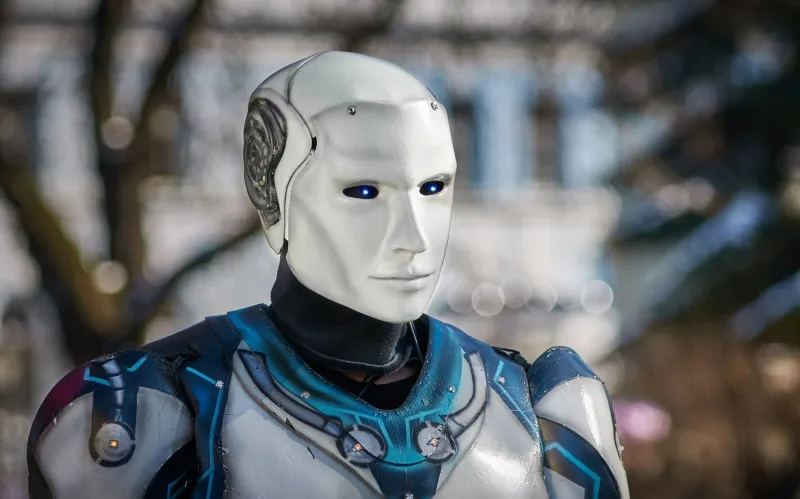
You're standing in a fully rendered medieval tavern. The firelight flickers. The ambient crowd murmur is spot-on. The bartender's face moves with surprising detail, eyes tracking you as you approach. Then they open their mouth.
The words are clear. The tone is appropriate. The pacing is technically fine. And yet — something in your gut immediately clocks it as wrong. Not broken. Not glitchy. Just... off. Like drinking milk that's one day past its expiration date. You can't quite explain it, but you put the glass down anyway.
This is the voice version of the uncanny valley, and it might be VR's most stubborn immersion problem right now.
The Visual Side Got Fixed. The Audio Side Didn't Get the Memo.
Over the past few years, the visual fidelity of virtual environments has taken enormous leaps. High-fidelity avatars, real-time lighting, detailed facial animation — the gap between what we see in VR and what we see in real life has genuinely narrowed. For a lot of players, the eyes are mostly convinced.
The ears are a different story.
AI-generated voice synthesis has also improved dramatically — anyone who's played with tools like ElevenLabs or heard the latest generation of text-to-speech models knows these aren't the robotic monotones of five years ago. Technically, the waveforms are cleaner. The prosody — the rise and fall of speech — is more natural. Pronunciation is nearly flawless.
But "technically impressive" and "emotionally convincing" are two very different bars, and right now there's a canyon between them.
"The brain is doing a constant background check on every voice it hears," says one voice actor who's done extensive work in immersive audio projects (and asked to stay anonymous because of ongoing client relationships). "It's looking for micro-variations, breath patterns, the tiny hesitations people make when they're actually thinking. AI voices pass the first few tests and then fail a test you didn't even know existed."
What Your Brain Is Actually Listening For
Here's the thing about human speech: it's inefficient by design. Real people stumble. They breathe mid-sentence. They trail off when they lose confidence. They emphasize the wrong word sometimes. These aren't flaws — they're signals. Your brain reads them as proof that a real cognitive process is happening on the other end of the conversation.
AI-generated dialogue tends to be too clean. The rhythm is too consistent. The emotional coloring, while present, often lands slightly adjacent to where it should — like someone doing an impression of an emotion rather than actually feeling it. Technically, the sadness is there. But it doesn't land the same way.
Psychologists call this "vocal authenticity detection," and humans are extraordinarily good at it — probably because we've spent hundreds of thousands of years figuring out when someone is lying to us or performing rather than communicating genuinely. We can't necessarily articulate what's wrong. We just feel it.
In a flat medium — a podcast, a phone call, an audiobook — that slight wrongness is noticeable but tolerable. In VR, where your entire sensory environment is engineered to convince you that you're somewhere, it becomes actively destabilizing. The voice is the crack in the wall that reminds you the wall is fake.
The Industry Is Pushing Hard in the Wrong Direction
Here's where it gets frustrating from a player's perspective: the VR industry is moving aggressively toward AI-generated dialogue, not away from it.
The appeal is obvious. Hiring voice actors to record thousands of lines of branching NPC dialogue is expensive and logistically complicated. AI generation can produce infinite variations on demand, adapt to player choices in real time, and scale to massive open worlds without a budget blowout. For studios trying to build living, breathing virtual environments, the economics are irresistible.
But the player experience is suffering for it. Multiple VR communities on Reddit and Discord have threads where users specifically flag "the voice thing" as a reason they bounced off otherwise well-reviewed experiences. It doesn't always make the formal review scores — it's subtle enough that players struggle to articulate it — but it's there, quietly eroding the sense of presence that VR depends on.
"Immersion isn't a single thing you achieve," says one indie VR developer who spoke with PertsyVR about their current project. "It's more like a chain. And the voice is one of the weakest links right now. You can have everything else perfect and one weird NPC conversation pulls someone right out."
The Gap Between Hearing and Feeling
There's a concept in audio design called emotional congruence — the idea that what you hear needs to match not just the scene but the emotional register your brain is already operating in. Horror games have understood this forever. The sound design in a game like Resident Evil works because every audio cue is calibrated to amplify dread, not just represent it.
VR NPC voices are failing at emotional congruence even when they're technically accurate. A character might say the right words in the right tone, but if the micro-timing is off — if the pause before a response is two beats instead of one and a half — the brain flags it. Not consciously. Just as a low-level wrongness that accumulates over the course of an experience.
Voice actors who've worked on both traditional game projects and AI-assisted VR productions describe a real difference in how their work lands with players. "When I record a line, I'm making hundreds of tiny choices," one actor explained. "Where do I breathe? Where do I let the sentence hang? Those choices are based on the character's psychology. AI doesn't have a psychology. It has patterns."
Can It Be Fixed?
The honest answer is: not easily, and not soon.
Some studios are experimenting with hybrid approaches — using AI to generate base dialogue but running it through a layer of trained emotional modeling, or using real voice actor performances as anchor points that AI interpolates between. The results are better, but the uncanny valley effect hasn't been eliminated, just pushed back a little.
Others are arguing that the solution isn't to make AI voices more human, but to design VR experiences that don't require voices to carry emotional weight in the first place — leaning into environmental storytelling, gesture, and ambient audio in ways that reduce reliance on NPC dialogue.
And a vocal contingent of players and creators are simply making the case for keeping human voice actors in the loop, even if it means smaller, more focused worlds with fewer but more convincing characters.
For now, though, if you've ever pulled off a headset after an otherwise great VR session with a nagging sense that something felt slightly hollow — there's a good chance the voice was the culprit. Your brain noticed something your conscious mind couldn't name.
That's a harder problem to patch than a graphical glitch. And until the industry figures it out, the most immersive virtual worlds are going to keep cracking right where they should feel most alive.